3 Visualization Techniques to Boost Your Creativity sets the stage for exploring dynamic methods that can revolutionize your creative process. Dive into the world of mind mapping, mood boards, and visualization through storytelling to unlock your full creative potential.
Discover how these techniques can elevate your ideas and bring a new level of imagination to your projects.
Introduction to Visualization Techniques
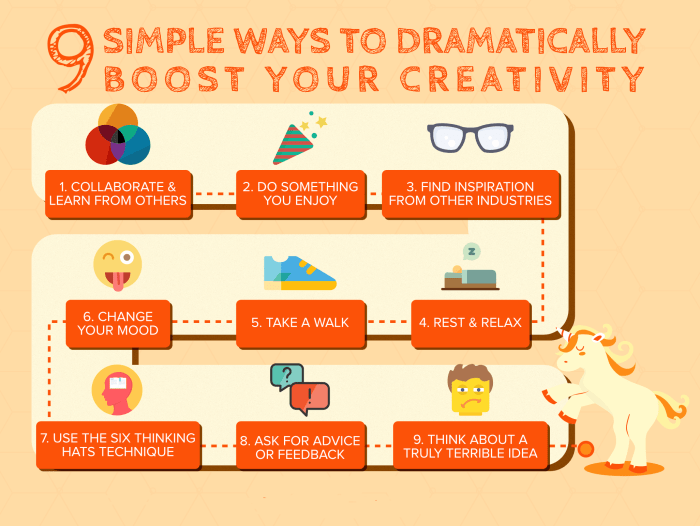
Visualization techniques are powerful tools that can significantly boost creativity by engaging the mind in a process of mental imagery and creative thinking. When we visualize our ideas, thoughts, or goals, we are activating the creative centers of our brain, leading to new perspectives and innovative solutions. In various industries and fields, visualization techniques are commonly used to enhance creativity and problem-solving skills.
For example, in the fields of architecture and design, professionals often use sketches, drawings, and 3D models to visualize their concepts and bring them to life. In sports, athletes use visualization to mentally rehearse their performances and improve their skills. Even in business, professionals use visualization techniques to brainstorm ideas, create strategic plans, and communicate complex concepts effectively. Incorporating visualization techniques into daily routines can bring a wide range of benefits.
It can help reduce stress and anxiety, improve focus and concentration, enhance memory retention, and boost overall creativity. By practicing visualization regularly, individuals can train their minds to think more creatively and find innovative solutions to challenges they may encounter.
Mind Mapping
Mind mapping is a powerful technique that involves visually organizing thoughts, ideas, and information in a structured way. By creating a mind map, you can enhance your creative thinking, improve problem-solving skills, and boost productivity.
Types of Mind Maps, 3 Visualization Techniques to Boost Your Creativity
- Traditional Mind Maps: These are the most common type of mind maps, with a central idea or topic at the center and branches radiating outwards to represent s or related concepts.
- Concept Maps: Concept maps focus on the relationships between different ideas or concepts, using linking phrases to show how they are connected.
- Spider Diagrams: Spider diagrams are similar to traditional mind maps but use a more structured approach with lines connecting ideas in a hierarchical manner.
Creating an Effective Mind Map
- Start with a central idea: Write down the main concept or topic in the center of the page.
- Add branches: Draw lines radiating outwards from the central idea to represent s or related ideas.
- Use s: Keep your ideas concise by using s or short phrases instead of full sentences.
- Add colors and images: Use colors and images to make your mind map visually appealing and help with memory retention.
- Connect ideas: Use lines or arrows to show relationships between different concepts and how they are interconnected.
- Review and refine: Take a step back to review your mind map, make any necessary adjustments, and refine your ideas for clarity.
Mood Boards
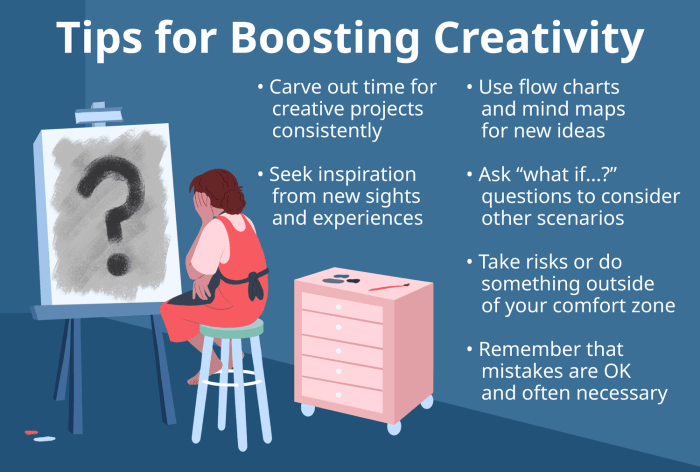
Creating a mood board is a powerful visualization technique that can help boost your creativity by allowing you to visually explore and express your thoughts, ideas, and inspirations. It is a collage of images, colors, textures, and words that reflect a particular concept or theme, serving as a visual representation of your creative vision.To create a mood board, start by determining the theme or concept you want to explore.
Collect images, photographs, color swatches, textures, and words that resonate with this theme. You can gather inspiration from magazines, books, online sources, or even your own photographs. Arrange these elements on a board, poster, or digital platform in a way that visually communicates the mood and aesthetic you are aiming for.
Process of Creating a Mood Board
- Choose a theme or concept to guide your mood board creation.
- Gather images, photographs, color swatches, textures, and words that align with your chosen theme.
- Arrange these elements on a physical board, poster, or digital platform to visually represent your creative vision.
- Experiment with different layouts and compositions to find the most impactful arrangement.
- Refine and edit your mood board until it accurately captures the mood and aesthetic you want to convey.
Significance of Color, Texture, and Imagery in Mood Boards
Creating a mood board involves a thoughtful selection of colors, textures, and imagery to evoke specific emotions, convey ideas, and inspire creativity.
- Color: Different colors evoke different emotions and moods. Choose a color palette that reflects the tone and atmosphere you want to create.
- Texture: Incorporating textures adds depth and tactile elements to your mood board, enhancing the visual appeal and sensory experience.
- Imagery: Images play a crucial role in conveying concepts and themes. Selecting relevant and compelling imagery helps communicate your creative vision effectively.
Visualization through Storytelling: 3 Visualization Techniques To Boost Your Creativity
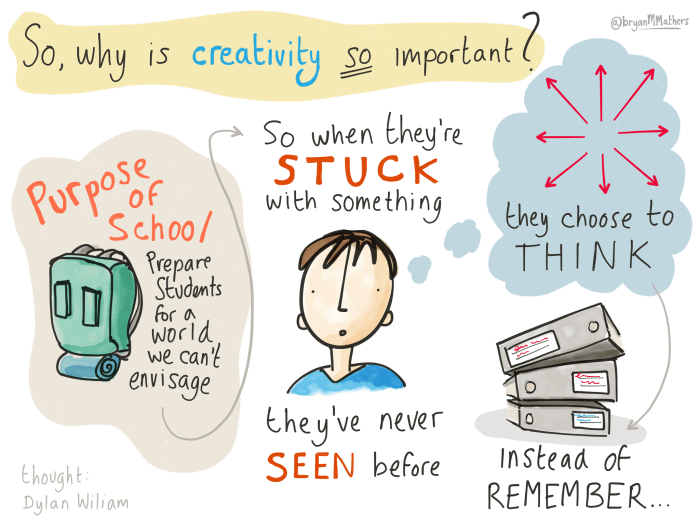
Storytelling can be a powerful visualization technique as it engages our imagination, emotions, and senses, allowing us to create vivid mental images. By weaving a narrative, we can bring our ideas to life, making them more tangible and inspiring. This technique not only enhances our creativity but also helps us communicate complex concepts in a compelling and memorable way.
How Storytelling Boosts Creativity
- Storytelling can help in idea generation by providing a narrative structure that guides our thoughts and helps us explore different possibilities.
- It can aid in problem-solving by allowing us to visualize different scenarios, anticipate challenges, and come up with innovative solutions.
- Stories evoke emotions, making our ideas more relatable and inspiring us to think outside the box.
Tips for Crafting Compelling Stories
- Start with a strong opening that grabs the audience’s attention and sets the tone for the story.
- Develop well-rounded characters or elements that the audience can connect with emotionally.
- Create a coherent plot that unfolds logically and keeps the audience engaged until the end.
- Use descriptive language and sensory details to paint a vivid picture in the audience’s mind.
- Add twists, turns, or unexpected elements to keep the story engaging and thought-provoking.
Last Recap
In conclusion, 3 Visualization Techniques to Boost Your Creativity offers a gateway to a more inspired and inventive mindset. Embrace these strategies to invigorate your creativity and approach challenges with a fresh perspective.